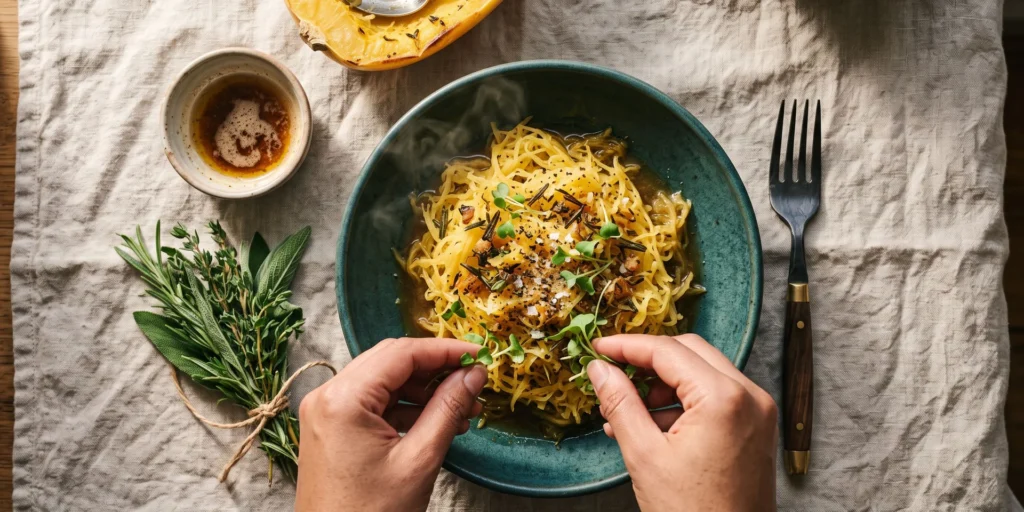
Baltimore’s brick rowhouses embrace autumn’s distinct chill, turning appetites toward comforting, yet refined, meals. This season, the Spaghetti Squash Recipe with brown butter and Tuscan herbs presents a sophisticated, plant-forward option. This dish delivers satisfying textures and deep, savory flavors, ideal for a crisp evening at home or a gathering with friends across Fells Point or Federal Hill.
The recipe emphasizes thoughtful preparation and the precise layering of flavors that define quality cooking, aligning with both healthful eating and a passion for refined taste.
Sourcing Seasonal Ingredients from Local Markets
The foundation of any exceptional dish begins with its components. Securing prime spaghetti squash and fresh herbs proves crucial for this recipe. Baltimore’s commitment to local sourcing shines through its lively market scene, offering superior seasonal produce.
Shoppers find an abundance of autumn vegetables at the Baltimore Farmers’ Market, located under the Jones Falls Expressway at Holliday and Saratoga Streets. This extensive Sunday market serves as an ideal spot to select dense, golden spaghetti squash and bundles of fresh sage, rosemary, and thyme. Quality ingredients significantly refine the final dish.
The Fells Point Farmers Market on Broadway Square also offers a curated selection of seasonal produce, perfect for those seeking ingredients while enjoying the historic waterfront. Home cooks seeking to emulate the rich herb profiles found in Little Italy’s kitchens, such as Sabatino’s Italian Restaurant on Fawn Street, will find the necessary fresh rosemary and sage at these local markets.
For those seeking exceptional dairy, The Fresh Market at Quarry Lake offers a reliable destination for high-quality, artisanal butter. Its rich fat content is essential for achieving the deep, nutty notes of brown butter. OK Natural Food Store in Mid-Town also provides bulk herbs and organic produce for those who prefer specific organic options.

Crafting the Aromatic Brown Butter Infusion
The rich, complex flavor of brown butter defines this recipe. Achieving that specific nutty aroma demands careful attention to temperature and timing. This technique calls for slowly melting unsalted butter until its milk solids caramelize, developing a distinct hazelnut essence.
Begin by gently melting the butter in a light-bottomed skillet, allowing it to bubble and foam. The solids collect at the bottom, gradually turning from white to a deep amber. The key involves watching for this color change and the characteristic nutty scent that signals perfection, then removing it from the heat immediately to prevent burning. This process ensures a rich, flavorful base for the squash.
Integrating fresh sage into this infusion adds an herbaceous counterpoint. As the butter browns, whole sage leaves crispen, releasing their aromatic oils. This creates a deeply fragrant medium that clings beautifully to the roasted squash strands.
Mastering the Squash Roasting Technique
Roasting spaghetti squash correctly ensures firm, distinct strands that mimic pasta. Begin the process by halving the squash lengthwise and scooping out the seeds and fibrous pulp. A light brush of olive oil and a sprinkle of salt and pepper enhance its natural sweetness during cooking.
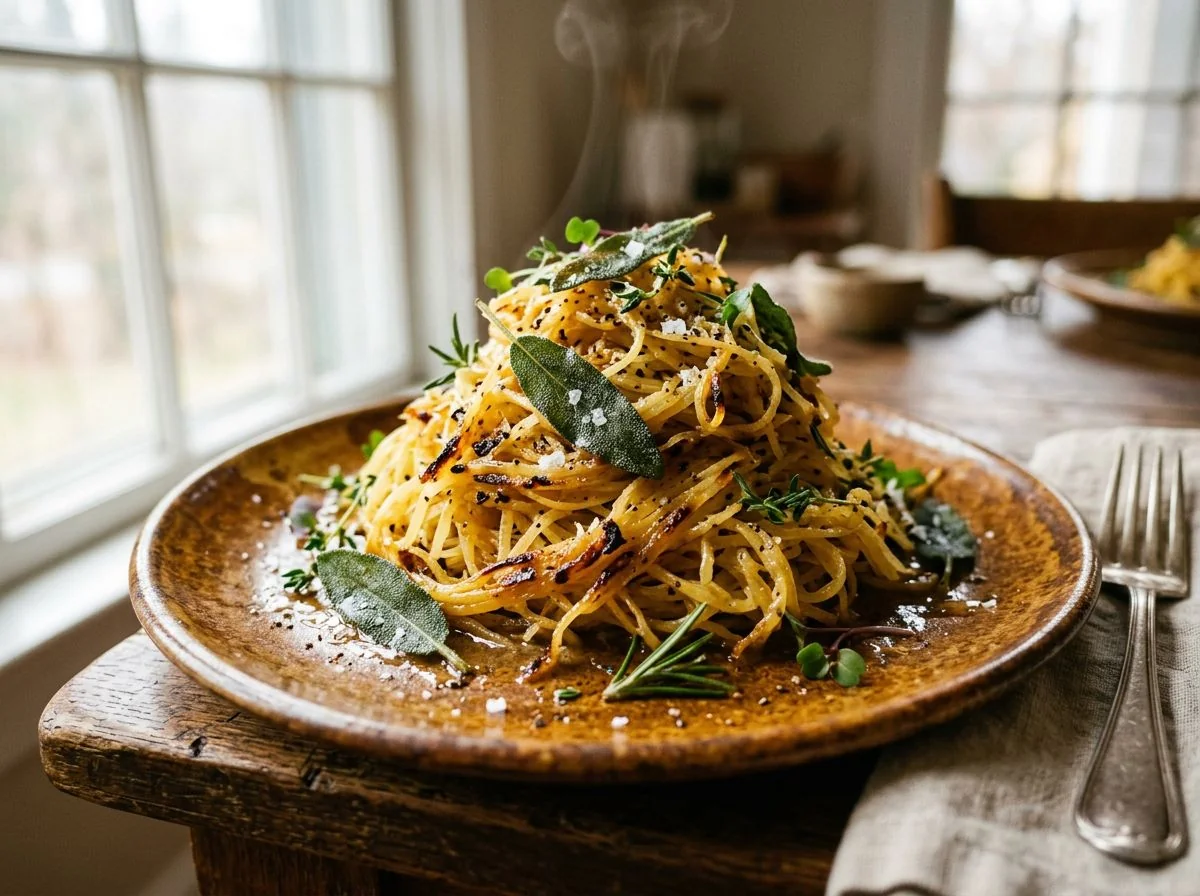
Place the squash cut-side down on a baking sheet lined with parchment paper. Roast at 400°F (200°C) for 35 to 45 minutes, or until a fork can easily pierce the skin and the interior strands are tender. Overcooking yields watery, mushy squash, so precision is key.
After roasting, allow the squash to cool slightly before using a fork to gently scrape out the strands. The strands should separate cleanly from the shell, retaining their structural integrity. These delicate strands provide a distinct texture, offering a light yet satisfying alternative to traditional pasta.

Spaghetti Squash Recipe: Brown Butter Tuscan Herb
This recipe showcases the elegance of simple, high-quality ingredients. It serves as a hearty autumn main course or a sophisticated side dish.
- Prep time: 20 minutes
- Cook time: 45 minutes
- Total time: 1 hour 5 minutes
- Servings: 4
Ingredients:
- 1 medium spaghetti squash (about 3 pounds)
- 3 tablespoons olive oil, divided
- Salt and freshly ground black pepper to taste
- 8 tablespoons (1 stick) unsalted butter
- 20-25 fresh sage leaves
- 1 tablespoon fresh rosemary, finely chopped
- 1 tablespoon fresh thyme leaves
- 2 cloves garlic, minced
- 1/2 cup grated Pecorino Romano cheese, plus more for serving
- 2 tablespoons fresh parsley, chopped, for garnish
- Pinch of red pepper flakes (optional)
Instructions:
- Preheat oven to 400°F (200°C). Line a large baking sheet with parchment paper.
- Carefully cut the spaghetti squash in half lengthwise. Scoop out the seeds and fibrous pulp using a spoon.
- Brush the cut sides of the squash with 1 tablespoon of olive oil and season generously with salt and pepper. Place the squash cut-side down on the prepared baking sheet.
- Roast for 35-45 minutes, or until the squash is tender and a fork can easily pierce it. Remove from oven and let cool slightly.
- While the squash roasts, prepare the brown butter. In a light-bottomed skillet, melt the unsalted butter over medium heat. It will foam, then the milk solids at the bottom will turn golden brown and begin to smell nutty. This is your pan fond developing.
- Add the fresh sage leaves to the browning butter. Cook until they become crispy and fragrant, about 1-2 minutes. Remove the skillet from heat once butter is amber colored.
- Add the chopped rosemary, thyme, and minced garlic to the brown butter skillet. Stir for 30 seconds, letting the residual heat warm the aromatics. If using, add a pinch of red pepper flakes.
- Once the squash is cool enough to handle, use a fork to scrape out the spaghetti-like strands into a large serving bowl.
- Pour the brown butter mixture over the spaghetti squash strands. Add the grated Pecorino Romano cheese.
- Toss gently to combine, ensuring all strands are coated. Taste and adjust seasoning with salt and pepper as needed.
- Garnish with fresh chopped parsley and additional Pecorino Romano cheese, if desired. Serve warm.
Cook’s Notes and Variations:
For a deeper flavor profile, consider adding a splash of dry white wine to deglaze the brown butter pan after removing the sage. This adds a bright acidity that cuts through the richness. A sprinkle of toasted pine nuts or walnuts offers a textural contrast and a deeper nutty note. For a richer, more complex herb blend, The Spice & Tea Exchange of Fells Point on Thames Street offers a variety of hand-mixed Tuscan-inspired seasonings that could be incorporated. Baltimore residents entertaining guests after visiting the Walters Art Museum or Mount Vernon Place find this dish an ideal centerpiece for autumn gatherings. Explore more Baltimore autumn dinner ideas here.
This dish pairs beautifully with a simple roasted chicken or a delicate pan-seared fish. The robustness of the brown butter also stands up well to heartier proteins, making it versatile for any autumnal menu.
Baltimore’s culinary scene embraces both heritage ingredients and modern techniques. This spaghetti squash recipe fits smoothly into that ethos, offering a dish that is both authentically comforting and distinctly refined. It reflects the community’s appreciation for quality, from the local farms feeding Lexington Market to the sophisticated kitchens found in Harbor East and Hampden.
Little Known Fact: Sage, or Salvia officinalis, holds a long and esteemed history in Italian cuisine, particularly in the Tuscan region, where its earthy, slightly peppery notes are foundational to many traditional dishes, often paired with butter, poultry, or pasta. (Source: Oxford Companion to Food)
Curated Literature & Baltimore Downtown Calendar
The Architecture of Focus: Deep Work & Modern Mastery
By Founders Library Press
A structured framework for strategic clarity, productivity, and authentic execution.
Upcoming Downtown Happenings
Live acoustic sessions, gallery receptions, literary salons, and independent trade shows across Baltimore.